The Extended-Wheelbase Tesla Model Y L Can Now Be Reserved
The previously China-only Model Y L will reach American buyers by October 2026.


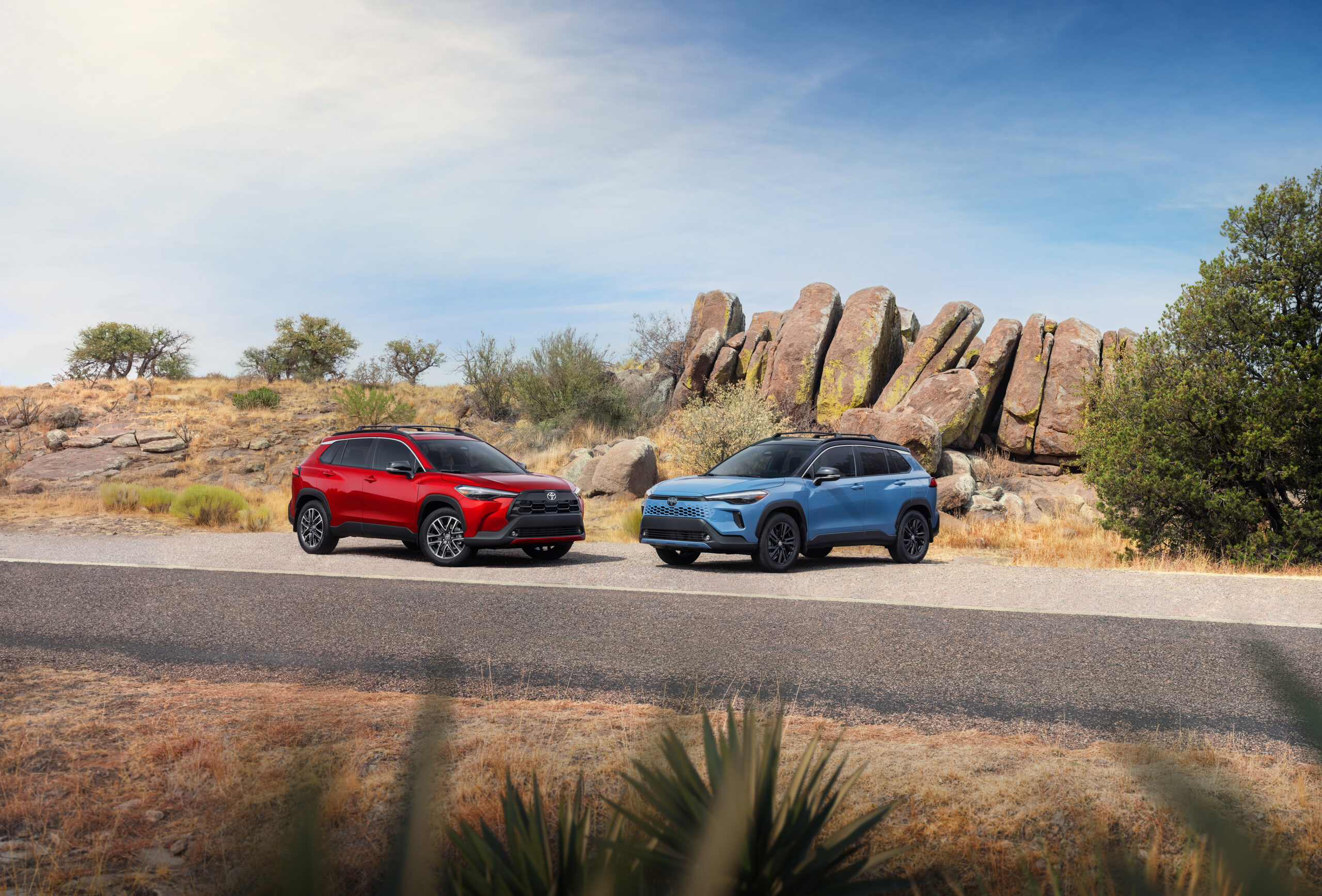
Today’s subcompact SUVs offer a good balance of value, maneuverability, and safety equipment. The Toyota Corolla Cross and Honda HR-V are two of the most popular choices in the segment, and they are remarkably closely matched across all metrics, especially pricing and standard equipment. If you’re in the market for a new subcompact, this overview will help you get a feel for where the two models stand, though be warned that these vehicles are so similar that it might still be difficult to make a choice between them.
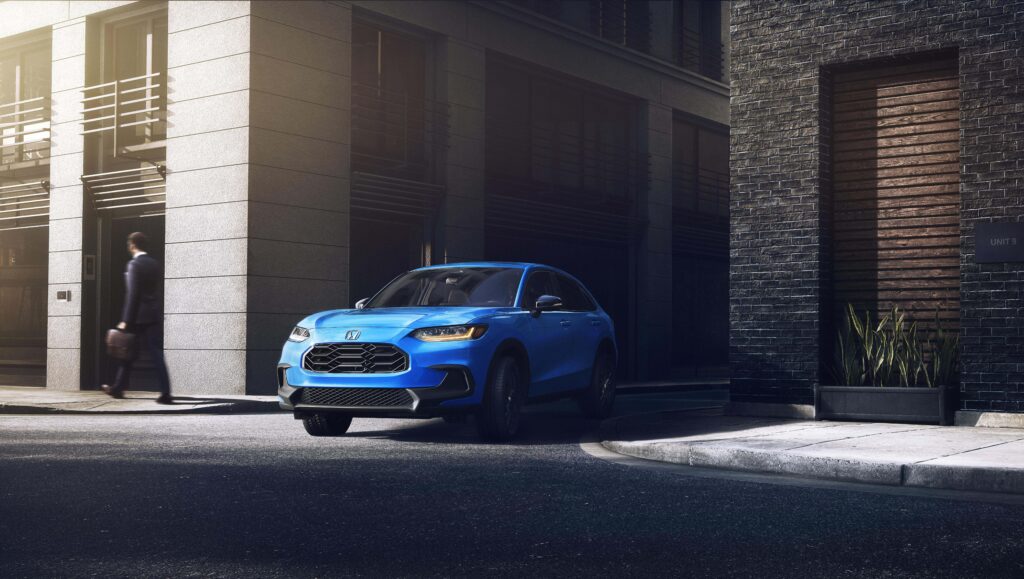
Both SUVs’ starting prices fall below $30,000 after destination, but the Corolla Cross undercuts the HR-V by a little over $1,000. The base front-wheel drive 2026 Corolla Cross L starts at $26,960 after a $1,450 destination charge, while the front-wheel drive 2026 HR-V LX costs $28,050, including the same fees.
That’s not a huge price difference, and the vehicles are remarkably well-equipped in their base forms, making it almost impossible to make a buying decision on price alone. The Honda offers a slightly larger standard infotainment touchscreen (a 9-inch display vs. the Toyota’s 8-inch unit), but the two come with similar safety equipment, front-wheel drive, and closely matched powertrains, though the Toyota has 11 more horsepower and an additional 13 pound-feet of torque.
Pricing might not be the best metric for deciding between the Corolla Cross and HR-V, but the good news is that both are among the best values in their segment. The average buyer paid around $50,000 for a new car in March 2026, so any vehicle priced at under $30,000 is a significant bargain, especially when you consider both SUVs’ generous standard features and strong predicted reliability ratings.
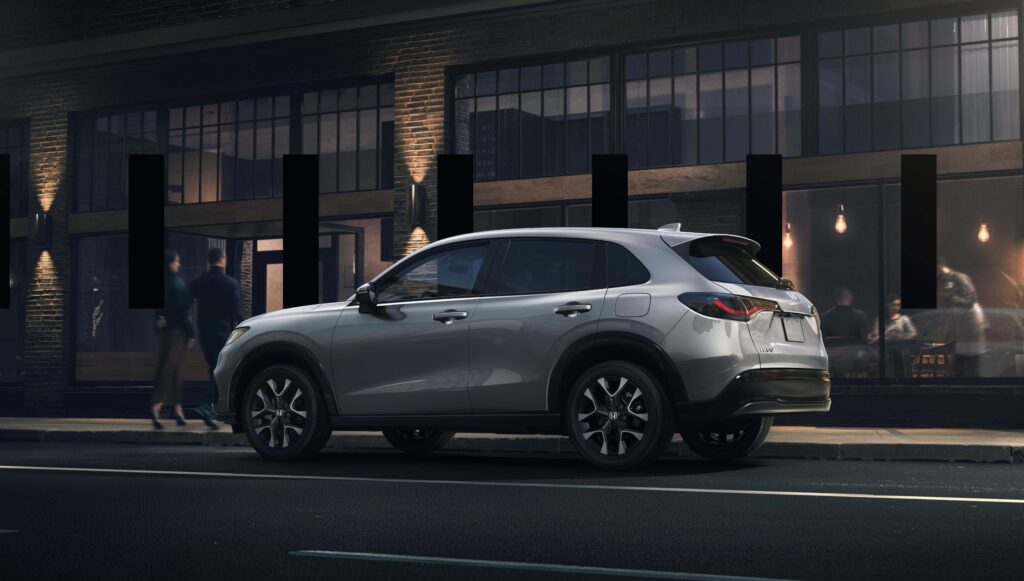
Before going too far, it’s important to note that Toyota offers gas and hybrid versions of the Corolla Cross, while the Honda HR-V is only available with gas. The base Corolla Cross comes standard with a 2.0-liter four-cylinder engine, making 169 horsepower and 151 pound-feet of torque. It’s paired with a continuously variable transmission and front-wheel drive by default, but all-wheel drive is available. The Corolla Cross Hybrid comes with the same engine and an electric motor that combine to make 196 horsepower. It also has a continuously variable transmission, but all-wheel drive is standard.
The 2026 Honda HR-V also has a 2.0-liter four-cylinder engine. It produces 158 horsepower and 138 pound-feet of torque, which are sent to the front wheels via a continuously variable transmission. It’s available with all-wheel drive.
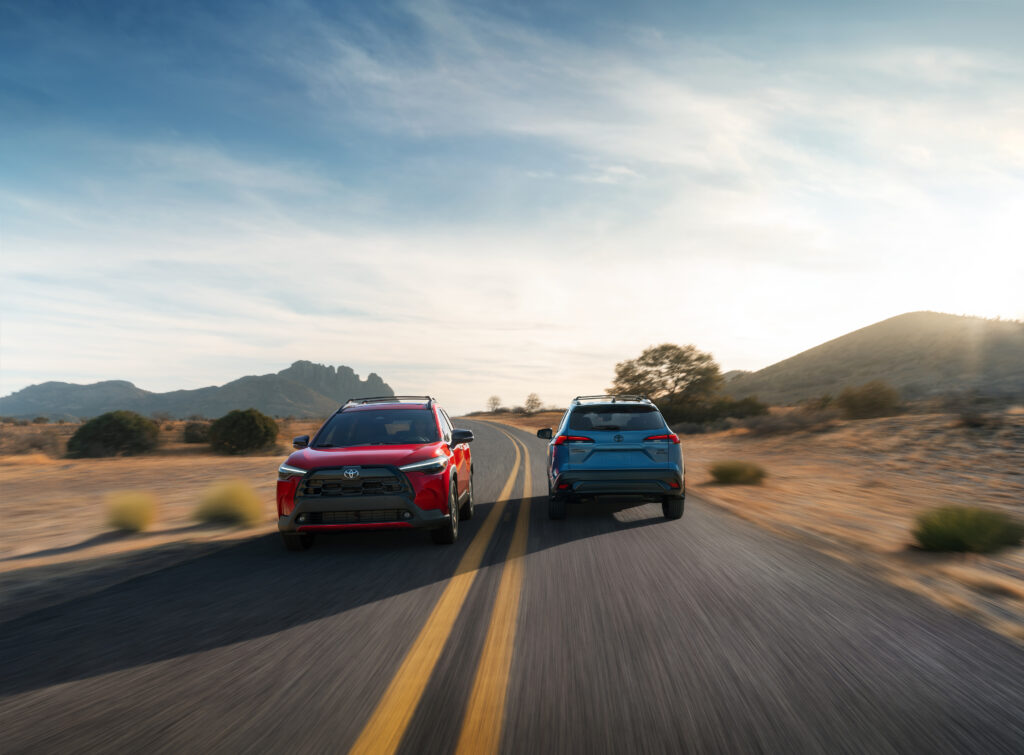
Neither vehicle is particularly engaging to drive, and neither could be considered quick by any stretch of the imagination. That said, the Toyota is slightly more powerful, giving it a small on acceleration, where it delivers a 9.2-second 0-60 mph time compared to the Honda’s 9.4-second time. Both SUVs have a CVT, which dulls the driving experience and leads to excessive engine noise under heavy acceleration. The Corolla Cross Hybrid benefits from an electric motor, which improves low-speed torque, giving it stronger acceleration off the line. That makes it better suited for quick maneuvers around town, such as pulling into traffic and leaving a stoplight.
Both vehicles have issues reaching and cruising at highway speeds. Getting up to speed from an on-ramp takes time, and with a CVT on board, the two SUVs’ engines make a ton of noise in the process. Once on the highway, there’s a significant amount of wind and road noise in the cabin, and passing is an exercise in patience, as the lack of power means you’ll have to choose your window carefully and give yourself plenty of time to complete the pass.
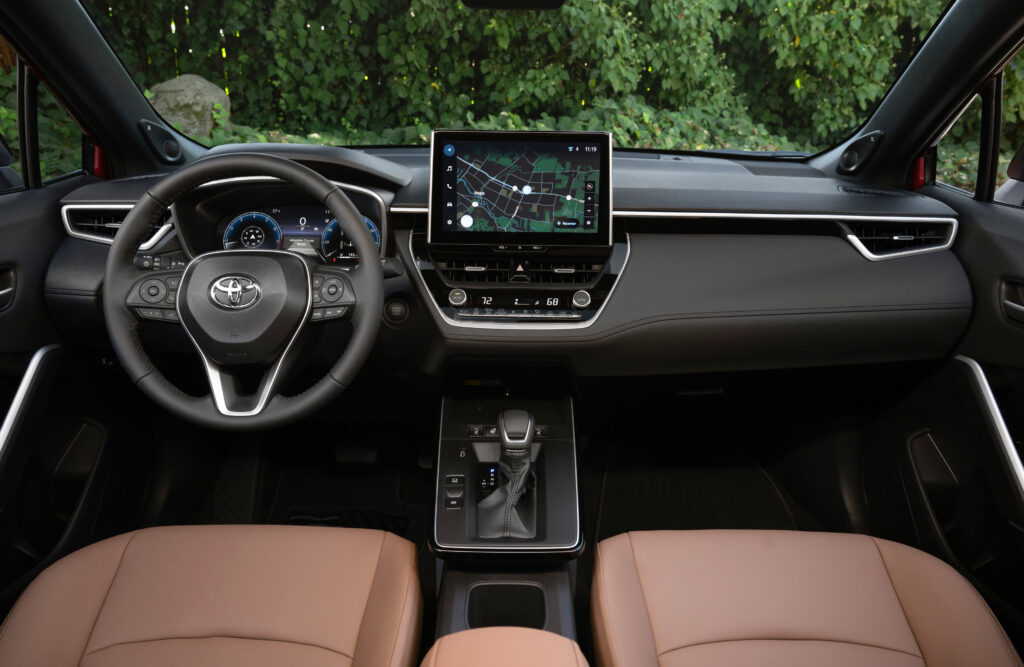
The Corolla Cross comes standard with cloth upholstery and 60/40 split-folding rear seats, while higher trims add synthetic leather. Heated front seats and a heated steering wheel are available. It uses a traditional gear shift lever and offers good ergonomics for the front passengers. The front seats are spacious, wide, and nicely supportive, and models with power seat adjustments offer a wide range of seating positions, allowing front passengers to get a comfortable setting with good outward visibility for the driver. Like many budget-friendly vehicles, the back seat is less accommodating, with a relatively flat bench that lacks shape and support. It’s also short on rear-seat legroom, with just 32 inches for passengers in the back. Rear headroom measures 39.1 inches, which looks decent on paper, but it doesn’t feel all that generous in person. The Corolla Cross has oddly shaped rear door openings that make it difficult for taller people to enter and exit the back seat, and, combined with the cramped rear legroom, can make for an uncomfortable ride for most adults.
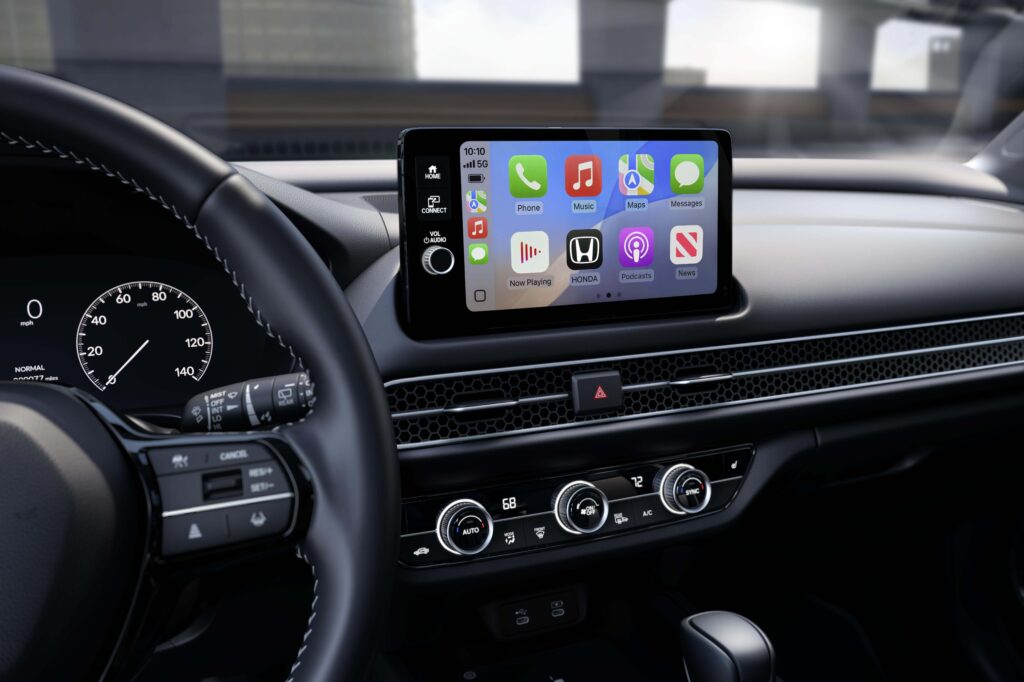
The Honda HR-V also comes standard with cloth upholstery and 60/40 split-folding rear seats, but it’s available with genuine leather in higher trims, giving it a nicer interior feel than even the most expensive Corolla Cross models. Heated front seats, a heated steering wheel, and a leather-wrapped steering wheel and shift knob are available. Rear legroom measures 37.7 inches, a significant upgrade over the Toyota’s numbers, and the back seat feels more spacious in person. That said, the HR-V also has funky back door openings with side overhangs that make it similarly inconvenient to get into the back seat, especially for adults. As it usually does, Honda gave the SUV a comfortable interior that focuses on function over form. That results in great ergonomics for the front passengers, with comfortable front seats, good outward visibility for the driver, and easy-to-use controls.
Toyota equips an 8-inch touchscreen as standard, which comes with wireless Apple CarPlay and Android Auto, Bluetooth, SiriusXM radio, six speakers, and more. A 10.5-inch display is available, along with a 9-speaker JBL audio system and wireless phone charging. While it still can’t be considered a class-leading system, Toyota’s improved infotainment interface is significantly better than earlier versions. It’s more responsive and intuitive, offering a lighter look, clearly labeled menus, and most functions available with one or two taps, greatly reducing the time to change settings. The new setup also makes the system less distracting to use while driving.
The 2026 HR-V comes standard with a 9-inch touchscreen, and Honda does not offer a larger optional display. The system offers wireless Apple CarPlay and Android Auto, Bluetooth, four speakers, and standard wireless charging. While it lacks a larger available screen, Honda’s infotainment system is just as easy to use as Toyota’s, though it’s slightly less refined. Most functions are available within one or two taps, making it similarly easy to use, but the base four-speaker stereo leaves much to be desired in terms of sound quality.
The Corolla Cross comes standard with Toyota Safety 3.0, which includes forward collision warnings, automatic emergency braking, lane keep assist, lane departure warnings, adaptive cruise control, automatic high beams, and road sign recognition. Blind spot monitoring with rear cross-traffic alerts is available. That’s a long list of standard driver-assistance features for the money, making the Corolla Cross a great first car or small family hauler. Those features also helped the Toyota earn a Top Safety Pick designation from the Insurance Institute for Highway Safety.
Honda is also generous with driver-assistance tech. Honda Sensing comes standard, bringing automatic emergency braking, forward collision warnings, lane keep assist, lane departure warnings, adaptive cruise control, traffic jam assist, automatic high beams, driver attention monitoring, and more. Blind spot monitoring with rear cross-traffic alerts, low-speed braking control, and parking sensors are available. The HR-V earned a Top Safety Pick+ designation, the highest award issued by the IIHS, beating the Toyota Corolla Cross in the rankings.
Despite a stronger powertrain, an available hybrid, and a slightly lower price, the Toyota Corolla Cross still comes out just behind the HR-V. The Honda’s interior is a bit more spacious and more comfortable, and it offers better ergonomics for the front passengers. It also offers better IIHS crash-test scores, though it’s important to note that both SUVs are impressive on the safety front. That said, the HR-V doesn’t significantly outperform the Corolla Cross in any one category, so the choice between them still mostly comes down to personal brand preference and styling choices.