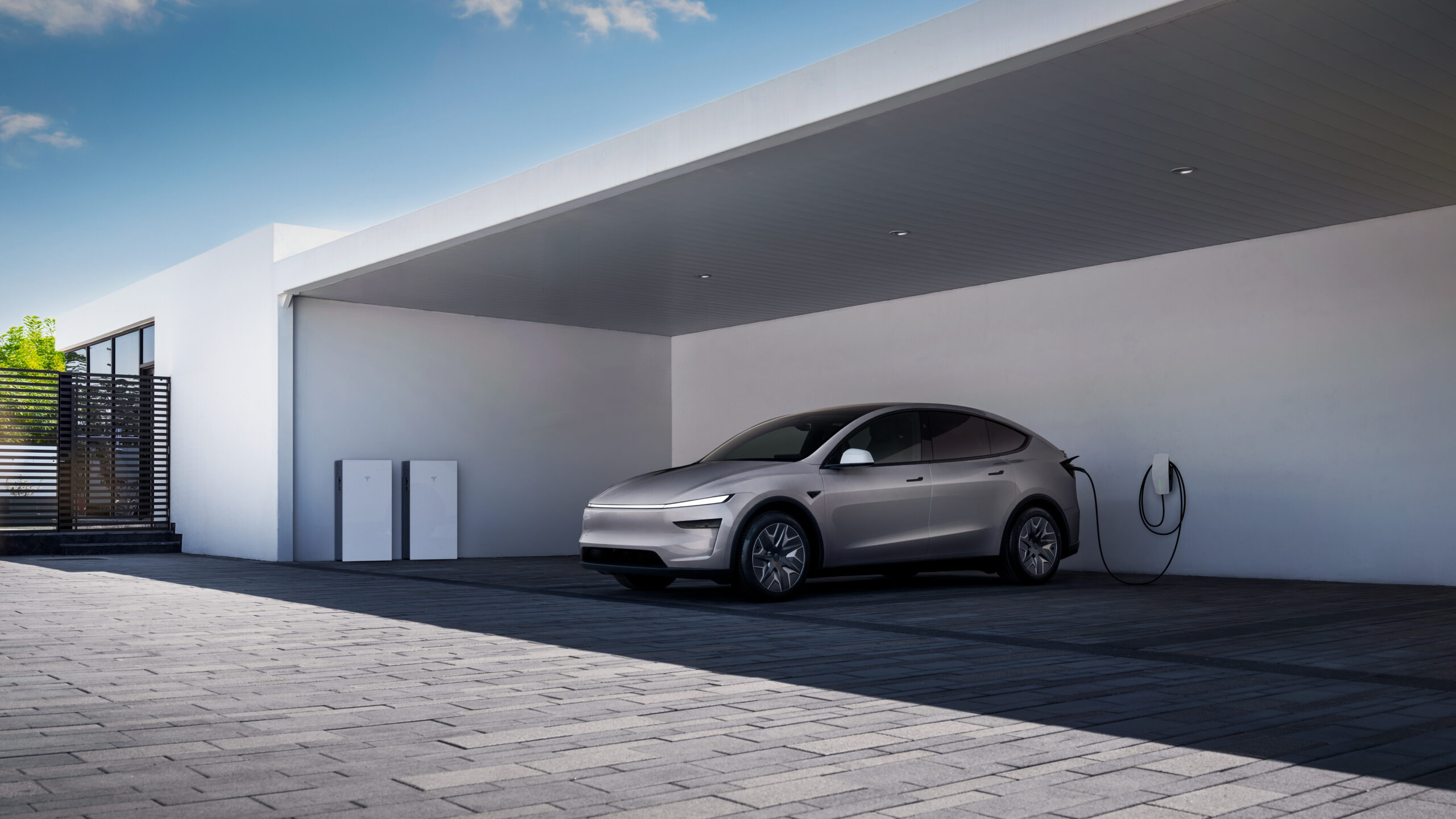
The Extended-Wheelbase Tesla Model Y L Can Now Be Reserved
The previously China-only Model Y L will reach American buyers by October 2026.



Subaru hit the ground running in 2026, debuting a few new electric models. The most affordable is the new Trailseeker EV, one of the brand’s quickest and most powerful models to date. Its size and positioning put it into almost direct competition with the Chevrolet Blazer EV, a longer-running model from General Motors. We recently compared the two EVs on our YouTube channel, so here’s a bit more detail.
2026 Subaru Trailseeker base MSRP: $41,445 (includes $1,450 destination)
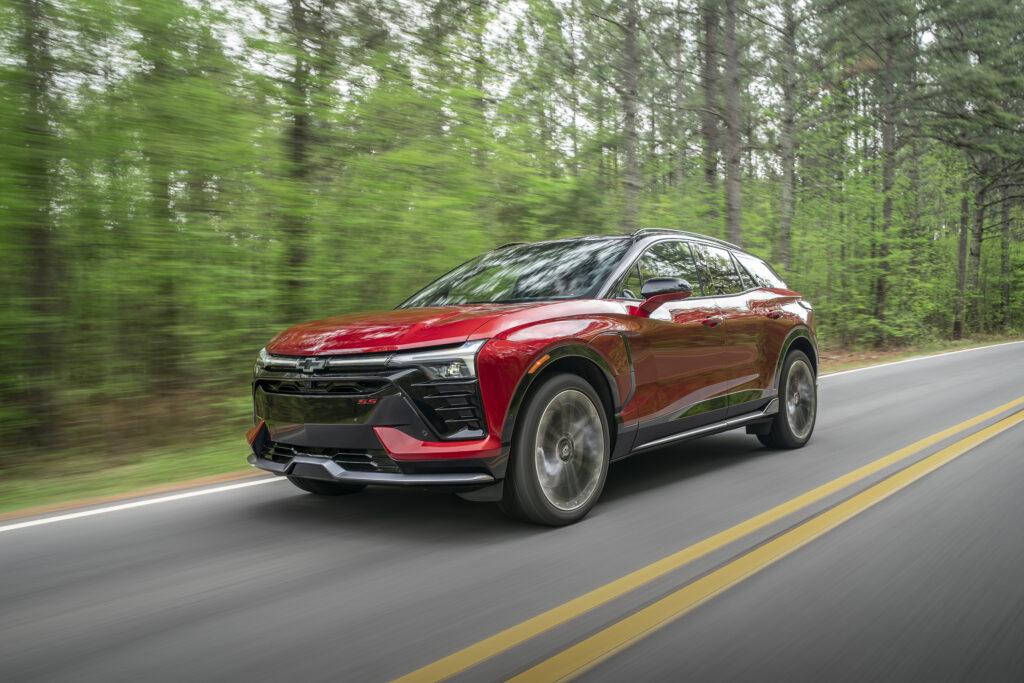
2026 Chevrolet Blazer EV base MSRP: $46,495 (includes $1,795 destination)
The big story for the 2026 Subaru Trailseeker is its standard powertrain, which includes all-wheel drive and incredible acceleration. It delivers 375 horsepower from its dual-motor powertrain, enough to run 0-60 mph in 4.4 seconds, making it the quickest Subaru sold in the United States so far. Those are incredible numbers for a $40,000 vehicle, and it doesn’t skip the off-road goodies Subaru is known for. The Trailseeker offers 8.5 inches of ground clearance and comes standard with X-Mode driving configurations, including snow/dirt and deep snow/mud.
At the same time, Subaru quotes up to 280 miles of range on a charge, with 150-kW charging speeds. While that’s not the fastest charging time on the market, it’s good enough to charge to 80 percent in around 28 minutes, and every Trailseeker leaves the factory with a North American Charging Standard (NACS) port, giving it access to the Tesla Supercharger network.
The Blazer EV comes standard with a single-motor powertrain and rear-wheel drive. The base FWD configuration offers 220 horsepower and 243 pound-feet of torque. An upgraded RWD model delivers 365 horsepower and 325 pound-feet of torque. The base AWD model has 30 horsepower and 355 pound-feet of torque, and the range-topping SS model’s dual-motor setup makes up to 615 horsepower and 650 pound-feet of torque.
Range numbers for the Chevy start at 283 miles for the AWD model and reach 334 miles for the extended-range RWD model. The powerful SS model reaches 303 miles, and the base FWD version can travel 312 miles on a charge. While it can access NACS chargers, the 2026 Blazer EV requires an adapter. Models with the smaller 85-kWh battery charge at 150 kW, and the larger battery pack can hit 190 kW, allowing the Blazer to add up to 87 miles of range in 10 minutes for some configurations.
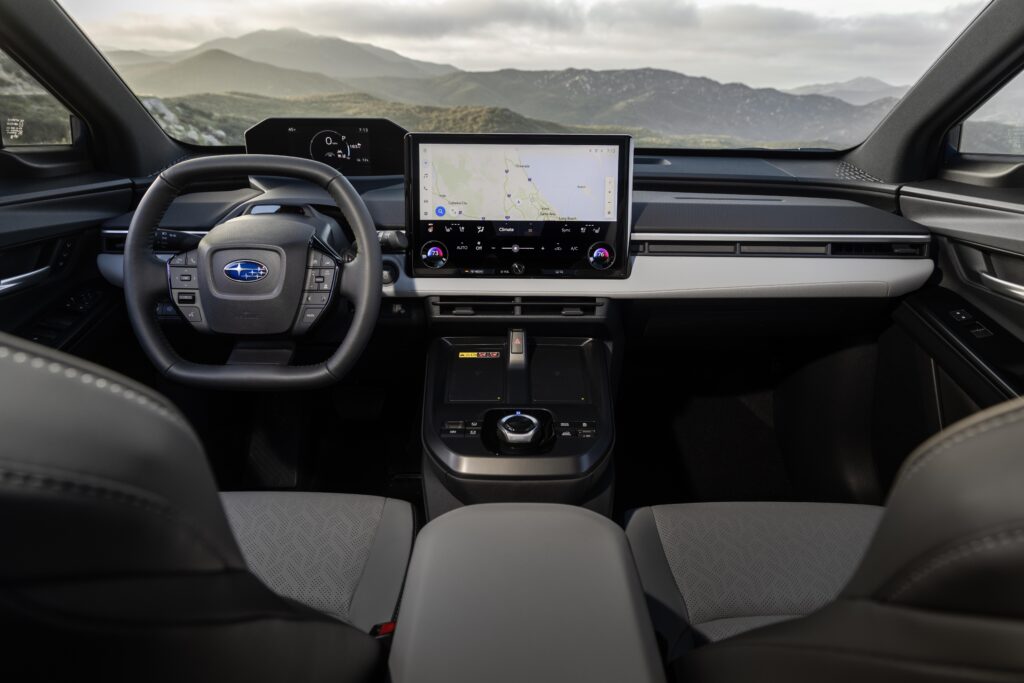
The Trailseeker comes standard with a 14-inch touchscreen offering wireless Apple CarPlay and Android Auto. Heated front seats are also standard, along with dual wireless charging pads, a power rear liftgate, and synthetic leather upholstery. Subaru’s infotainment system has been clunky and frustrating to use for a while now, but the latest iteration is more refined and responsive, making it much less annoying to use. The Limited trim adds a Harman Kardon sound system, a panoramic-view camera system, heated rear seats, a heated steering wheel, and more. The top Touring trim comes with a panoramic glass roof, ventilated front seats, radiant leg warmers, and optional leather upholstery.
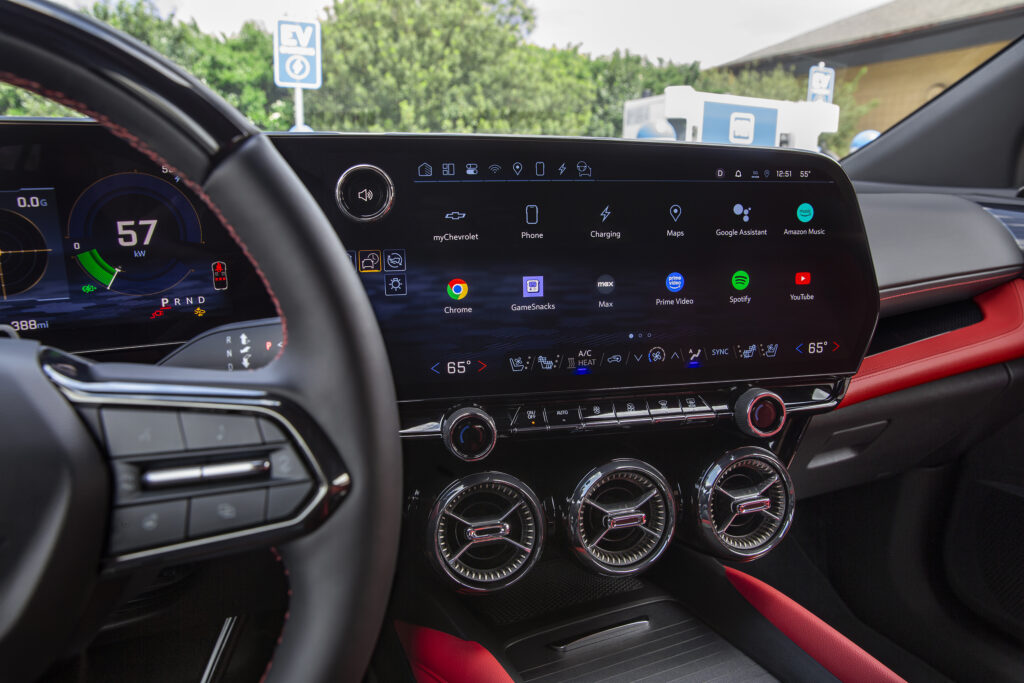
The base Blazer EV LT FWD comes with a 17.7-inch touchscreen running Google built-in. It’s paired with an 11-inch digital gauge cluster. General Motors skips Apple CarPlay and Android Auto in its newest EVs, relying instead on its in-house interface. The setup might not feel as familiar to many people as smartphone mirroring systems, but it is relatively intuitive, and the Blazer EV has enough processing power to run everything smoothly. Higher trims add a Bose stereo system, ambient interior lighting, wireless phone charging, upgraded upholstery, and more.
You’d be right to look at this and think that Subaru is much more generous with standard interior and tech features, especially considering that the base Trailseeker is significantly more affordable than the most affordable Blazer EV. GM’s decision to exclude Apple CarPlay and Android Auto likely won’t matter much for some buyers, but many people place those features high on their priority lists, so that’s something to consider if you’re looking at a new Chevy EV.
The Trailseeker has Subaru EyeSight Driver Assist Technologies as standard, which include forward collision warnings, lane keep assist, automatic emergency braking, adaptive cruise control, emergency steering, and more. Blind spot monitoring with rear cross-traffic alerts is also standard, along with automatic wipers and headlight washers. We don’t have crash-test scores for the new EV yet, but it’s reasonable to expect strong performance, as Subaru’s other models return solid results.
Chevy gives the Blazer EV blind spot monitoring with rear cross-traffic alerts, front pedestrian and bicyclist braking, LED headlights, reverse automatic braking, forward collision warnings, lane keep assist, lane departure warnings, and much more. Even with that generous list of features, the Blazer EV missed out on an IIHS Top Safety Pick, and its driver-assistance systems didn’t score the best in IIHS testing. That doesn’t mean it’s unsafe by any means, but it does mean some refinement is in order to achieve top honors.
It’s usually hard to recommend a vehicle based on price alone, and thankfully, we don’t have to do that here. That said, the Subaru Trailseeker’s price is hard to ignore, but you get more than expected for the money. Standard all-wheel drive, desirable tech features, and impressive performance are all great value boosters for the least expensive Subaru. You’ll have to pay thousands more to get a similarly equipped Blazer EV, and even the cheapest model outprices the Trailseeker by quite a bit.